"Stop thinking about the camera. That's not your job."
I've said this more times than I can count. On set, mid-shoot, sometimes before we even start. It's the single most important thing I tell every model I work with, and it's the one thing most of them struggle with.
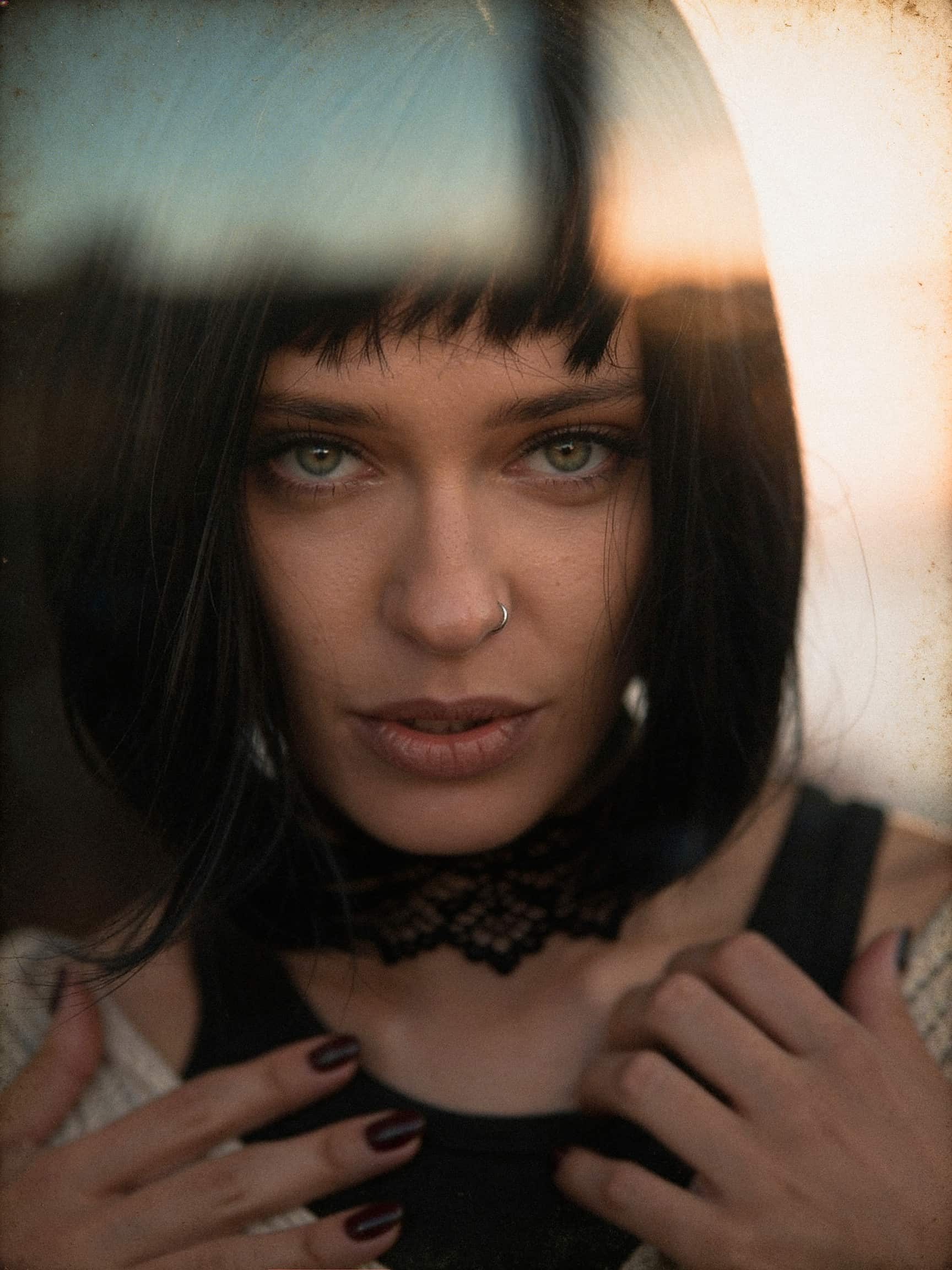
There's a portrait I shot recently. Close-up, natural light cutting through glass, her hands pulling at the collar of a black top. Lace choker. Dark nails. None of that matters. What matters is her eyes. There's something in them. Not a pose, not an expression she rehearsed in the mirror. A thought. A weight. Something real that was happening inside her head at that exact moment.
That's the frame. That's the whole point.
The eyes carry the frame. Everything else is just context.
The biggest mistake
Here's what happens on most shoots. A model walks in, she knows she's being photographed, and the first thing her brain does is try to control how she looks on camera. Tilt the chin. Find the angle. Suck in. Relax the jaw but not too much. She's running a checklist in her head, and every item on that list is the photographer's job, not hers.
The moment you start thinking about what the camera sees, you've stopped doing your job and started doing mine. Poorly. Because you don't have the camera in your hand. You don't see the frame, the light, the crop. You're guessing. And a guess always looks like a guess.
I've worked with models who are technically perfect. They know their angles, they know where the light is, they hit every mark. And the images are fine. Sharp, well-composed, publishable. But there's nothing behind them. No pull. You look at the photo and you move on. There's no reason to stop.
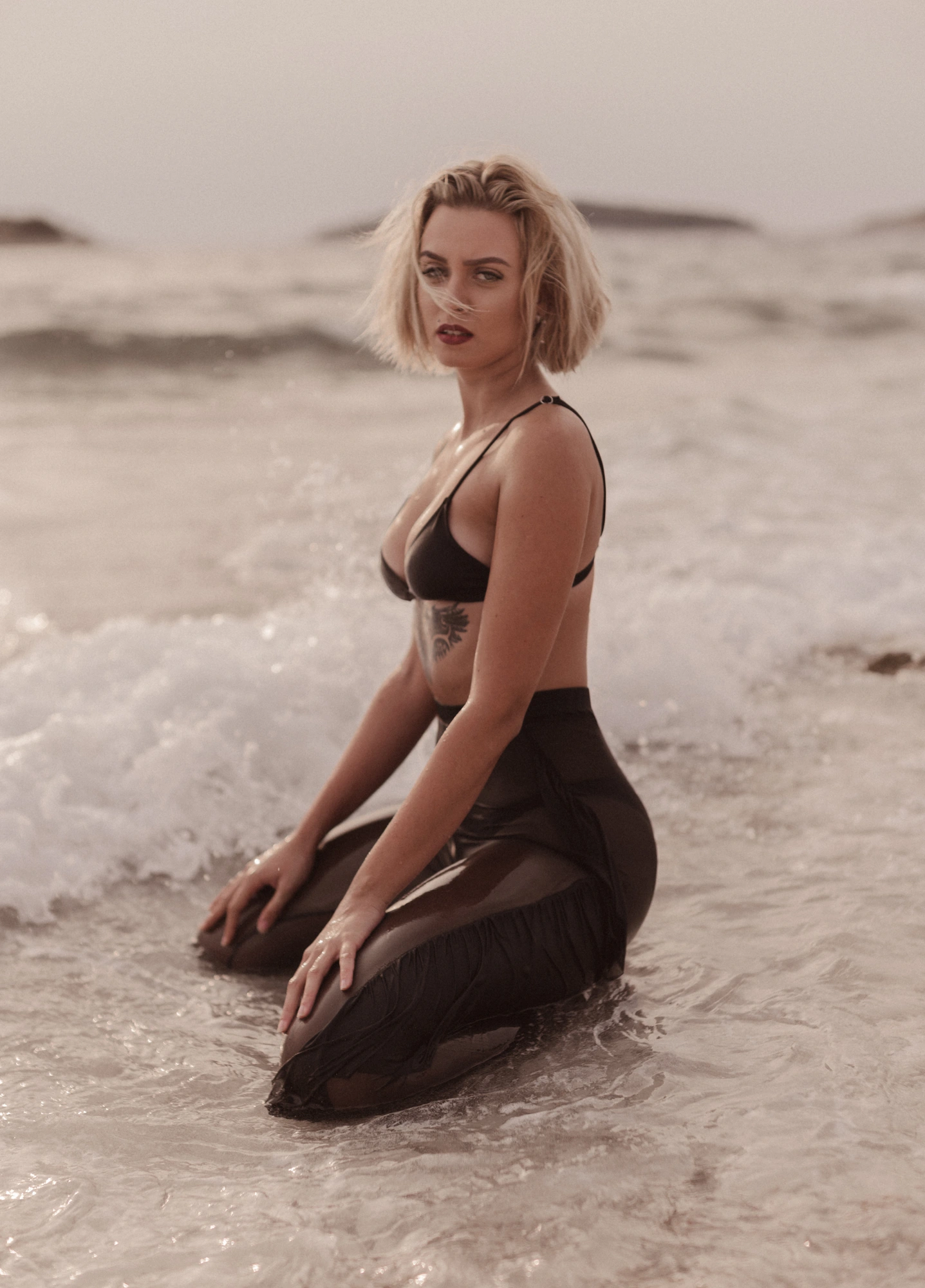
Then there are the ones who forget the camera exists. Who are somewhere else entirely, inside a thought, a memory, a feeling they decided to bring to set that day. Those are the frames that stop people. Those are the ones that end up on walls.
What the best ones know
The greatest models in the world all talk about this. It's not about how you look. It's about what you're communicating. Every interview, every masterclass, every behind-the-scenes. The ones who lasted, who built careers that spanned decades, they all come back to the same thing. Presence. Intention. Story.
It's good to understand the camera. It helps to know what a 35mm does versus an 85mm, how compression works, what a wide aperture means for your movement. That knowledge is useful. But it's background knowledge. It's context, not your task.
Your task is to feel something and let it sit on your face.
That's it. That's the entire job.
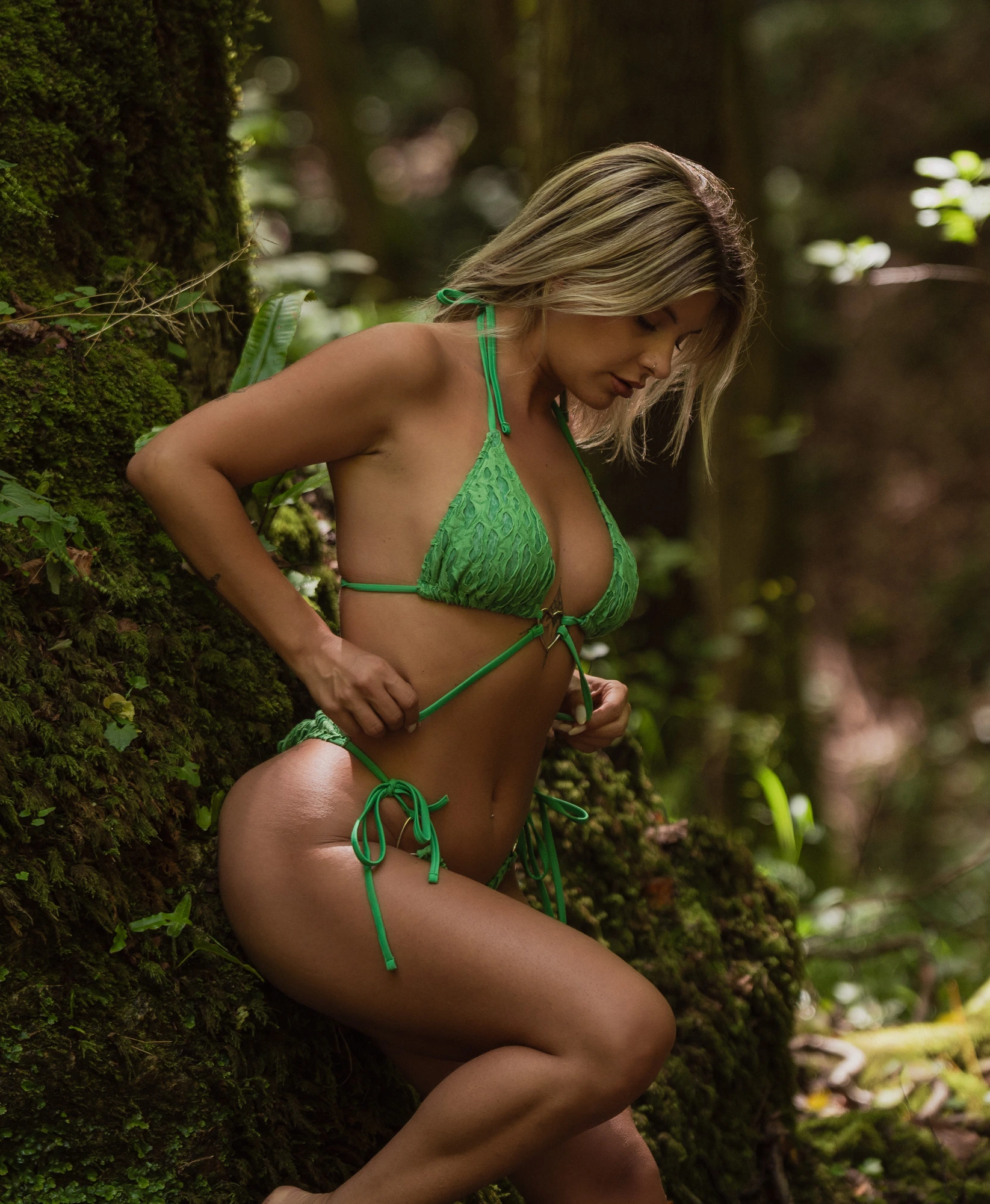
Presence over posing. Every time.
The muse
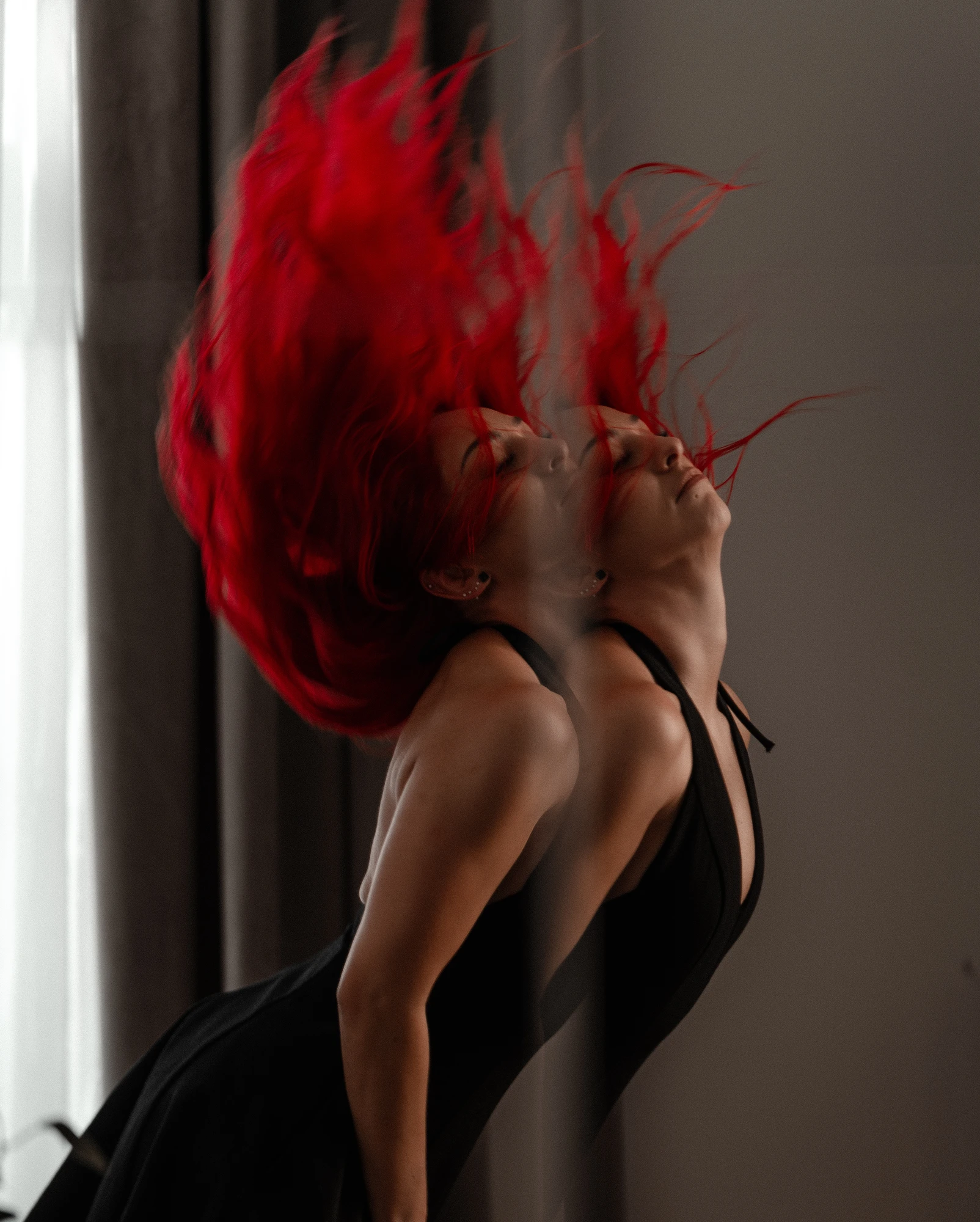
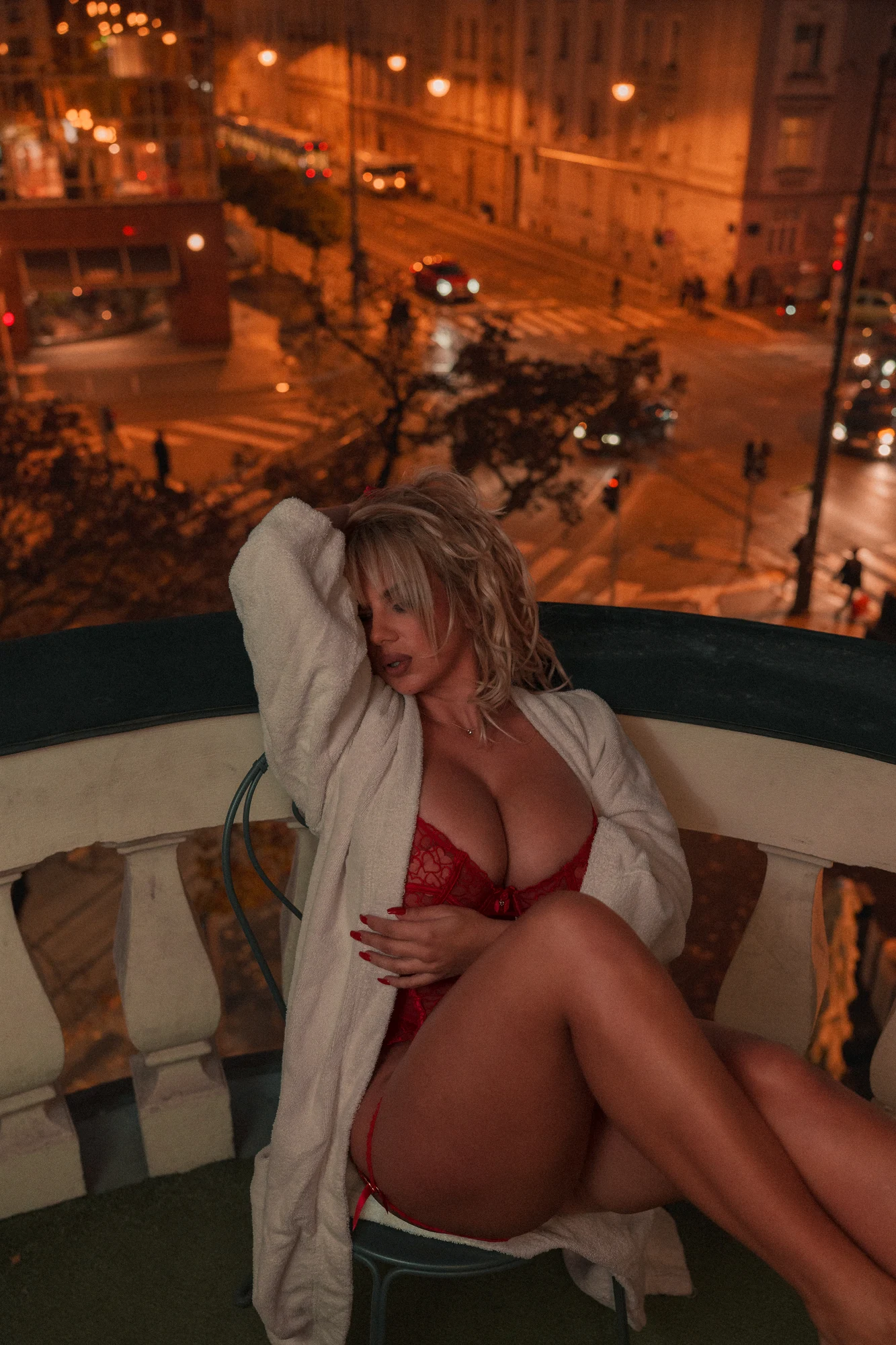
There's a difference between a model and a muse. A model gives you poses. A muse gives you material. A model reacts to direction. A muse reacts to herself, and the direction just points her in the right place.
The best sessions I've ever had were with people who came to set with something on their mind. Not drama, not chaos, just a thought. An idea they were turning over. A mood they didn't try to shake. They let that sit under the surface, and when the camera came up, it was there. In the eyes, in the way they held their hands, in the half-second pause before they shifted.
You can't manufacture that. You can't pose your way into it. It either lives in you at that moment or it doesn't.
A proper muse understands that her job is internal. The photographer handles the external. Light, angle, composition, timing. The muse handles what's underneath. What the viewer will feel when they look at the image three years from now and still can't explain why it holds them.
How to actually do this
So what does this look like in practice? Here's what I tell people before we shoot.
Forget the mirror. Whatever you practised at home, leave it there. The mirror shows you a reversed, flat, static version of yourself. The camera sees something completely different. Trust the photographer to find it.
Bring a thought. Before you walk on set, decide what you want to communicate. Not an expression, a feeling. Confidence, vulnerability, defiance, calm, tension. Pick one. Hold onto it. Let everything else, the posing, the angles, the movement, come from that one feeling.
Listen to direction, but don't perform it. When I say "look past me," I don't want you to mechanically shift your eyes. I want you to actually see something past me. Imagine it. Let your brain go there. The camera will catch the difference. It always does.
Stop checking yourself. The moment you start monitoring how you look, you've left the scene. You're no longer in the frame, you're outside it, trying to manage it. That disconnect shows. Every time.
Trust the process. Your job is to be present. My job is to capture it. The division is clean. The moment both of us try to do the same thing, neither of us does it well.
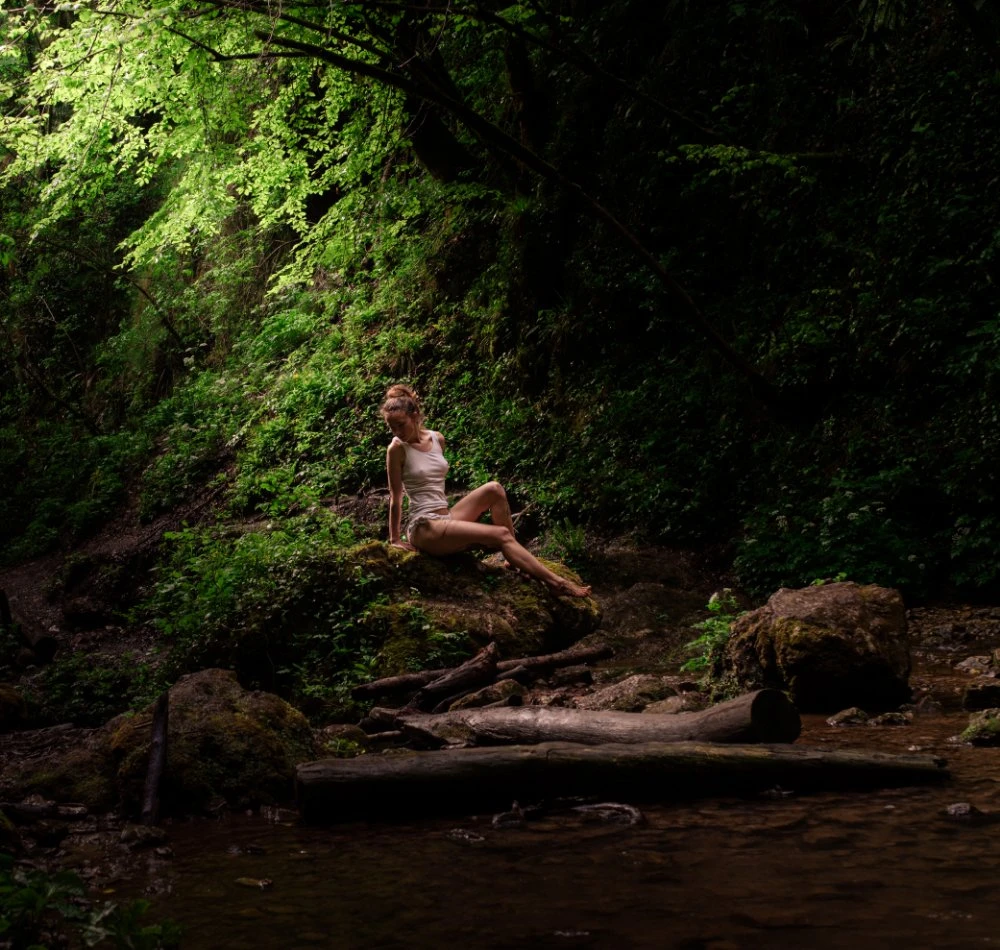
Trust the process. Trust the photographer. Be present.
Visual communication
All media is visual communication. Every photograph, every campaign, every editorial, it's a message being sent. And the model is the messenger. Not the production designer, not the lighting tech, not the retoucher. The model. The person in the frame whose eyes make the viewer stop scrolling.
If those eyes are empty, if they're just calculating angles, the message is dead. The production can be flawless, the light can be perfect, the wardrobe can cost more than my rent. None of it matters if the person in the frame isn't saying anything.
This is why I keep coming back to the same point on every shoot. Stop thinking about the camera. Think about yourself. Think about what you're carrying today, what you want the world to see, what story you want to leave in this frame.
The camera is just the tool. The photographer is just the translator.
You're the language.
If you want to see what happens when presence meets the frame, explore the full Deserted Depth project or check out the Fashion & Beauty portfolio.